Claude Design by Anthropic: Turning Ideas Into Visuals Without Design Skills
Anthropic has launched Claude Design, a new AI product that allows users to create prototypes, presentations, and visual content using simple descriptions. It aims to make design accessible for founders, product managers, and non-designers.
Anthropic is pushing deeper into the creative AI space with the launch of Claude Design, a new experimental product designed to help users turn ideas into visuals quickly.
Instead of opening complex design tools or relying on professional designers, users can now describe what they want, and Claude generates a visual starting point. From there, the design can be refined step by step through conversation, edits, and adjustments.
You can explore the official announcement here:
👉 https://www.anthropic.com/news/claude-design-anthropic-labs
From Idea to Visual in Minutes
The core idea behind Claude Design is simple.
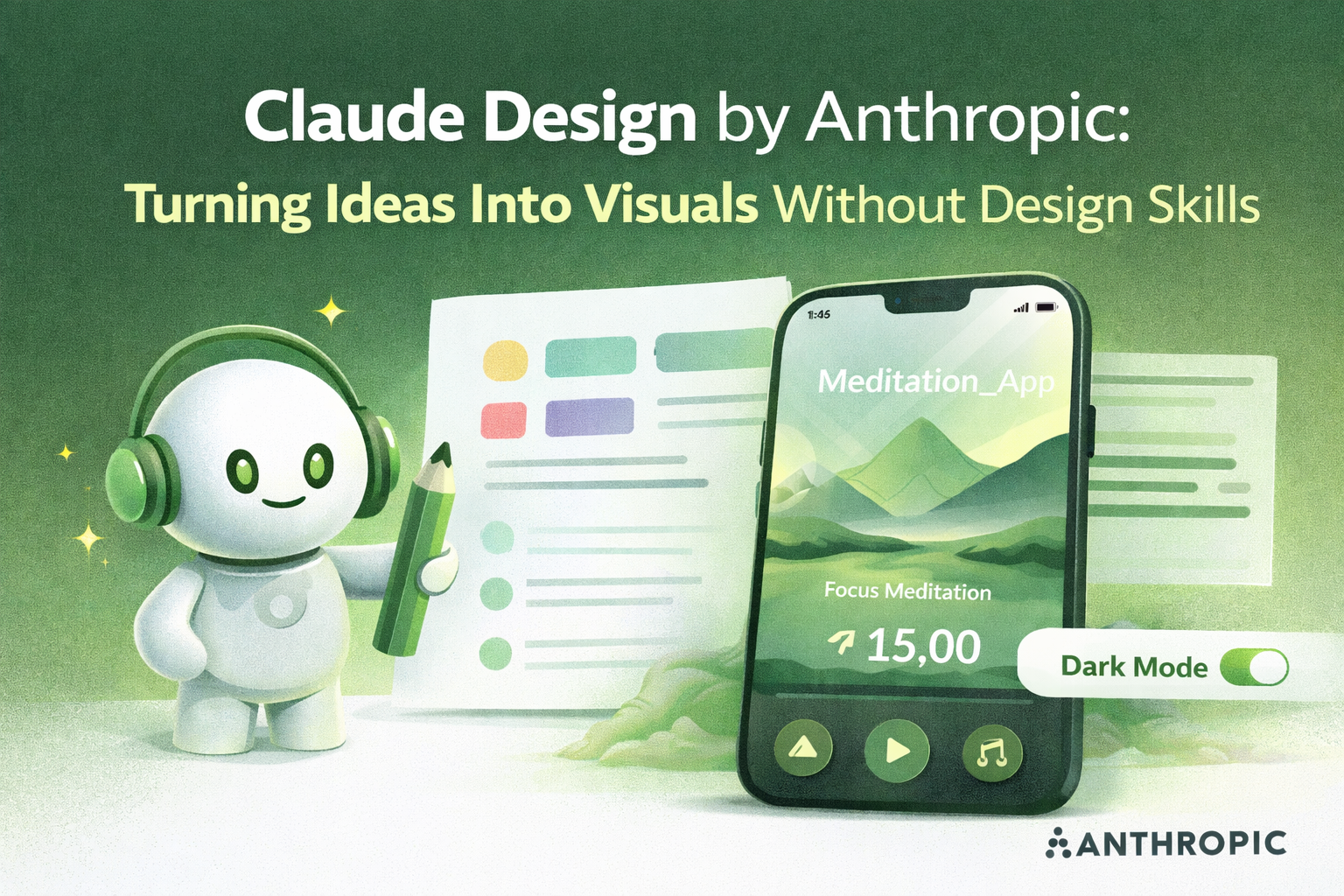
You describe something like a mobile app, a presentation, or even a landing page, and the system creates an initial version. For example, you could ask for a calm meditation app interface with soft colors and clean typography. Claude will generate a visual layout based on that description.
After that, you can tweak details like spacing, colors, or layout without starting from scratch. This makes the process feel more like a conversation than traditional design work.
Built for Non-Designers
One of the biggest barriers in product development is turning ideas into something visual.
Founders, product managers, and marketers often struggle to communicate their vision because they lack design skills. Claude Design is clearly built for this group.
It allows them to create prototypes, slides, and one-pagers without needing tools like Figma or advanced design knowledge. The goal is not to replace designers, but to help people get their ideas out faster.
More Than Just Mockups
Claude Design is not limited to static images.
It can create interactive prototypes, product wireframes, pitch decks, and even marketing assets. Teams can also collaborate on designs, leave comments, and refine everything together.
Another important feature is export flexibility. Designs can be shared as links, downloaded as PDFs or PPTX files, or even sent to tools like Canva for further editing.
Smart Design Systems
One standout feature is the ability to apply a company’s design system automatically.
Claude can read existing design files or codebases and use that information to maintain consistent colors, typography, and components across all outputs. This ensures that every design aligns with the brand without manual effort.
Teams can also refine and update these systems over time.
How It Fits Into the Current Design Ecosystem
At first glance, Claude Design may seem like a competitor to tools like Canva.
However, Anthropic positions it differently. Instead of replacing design tools, it acts as a starting layer. Users can generate ideas quickly and then move them into other platforms for final polishing and collaboration.
This makes it more of a bridge between raw ideas and finished design work.
Powered by Claude Opus 4.7
The product runs on Claude Opus 4.7, one of Anthropic’s most advanced models.
Currently, Claude Design is available in research preview for Pro, Max, Team, and Enterprise users. The rollout is gradual, meaning not everyone will get access immediately.
Why This Matters
The launch of Claude Design reflects a bigger shift in how digital products are being built.
AI is no longer just helping with code or writing. It is now becoming part of the creative process itself. Tools like this reduce the gap between idea and execution, especially for people who are not experts in design.
For startups and small teams, this could significantly speed up how quickly ideas turn into real, testable products.
Final Thoughts
Claude Design is not trying to replace designers. It is trying to remove the friction between thinking and creating.
For anyone who has ever had an idea but struggled to visualize it, this kind of tool can be a game changer.
The real impact will depend on how teams use it, but one thing is clear. The line between idea and execution is getting thinner.